
Key takeaways
- Chronic stress physically changes the brain. Unrelenting workplace stress causes structural changes that lower productivity and employee engagement.
- Prevention costs less than cure. Moving from reactive care to proactive mental health support can help reduce absenteeism, presenteeism and workers' compensation claims.
- Manager training drives measurable results. Leaders trained in mental health awareness show higher EAP usage and lower sick leave rates.
- Simple, accessible support matters most. Employees only use wellbeing programs they can easily find and understand.
"What really made the difference for me is seeing the image of a brain that was actually changing. It was changing structurally because the person was under unrelenting stress." -Paula Allen, Global Leader and VP of Research and Insights at TELUS Health
In Australia, 1 in 6 workers experience a mental illness. Yet research shows that mental health in the workplace remains a significant challenge for organisations around the world. According to the TELUS Mental Health Index (MHI), 36 per cent of workers in Australia have a high mental health risk (September 2025). Additionally, 61 per cent report feeling somewhat or extremely burnt out, with high workloads as the leading cause. Cumulatively, this means that Australian businesses lose $11 to $12 billion annually due to mental illness.
Under Australian workplace health and safety laws, employers have a legal duty to manage psychosocial risks. This means identifying and eliminating workplace risks like excessive workloads, bullying — which up to 50 per cent of employees have experienced — and poor support that can cause psychological harm. Compliance with the Fair Work Act requires businesses to maintain safe working environments and protect worker wellbeing.
While most HR leaders understand that their workforce needs mental health support to perform well, the question remains: How can they implement workplace wellbeing programs that actually work?
Modern complexities require simple employee assistance program support
The workforce today faces complex challenges. These include information overload, rising living costs, social isolation and conflicting demands between work and personal life that can undermine work life balance.
In our recent videocast, Paula Allen and Dr. Matthew Chow, Chief Mental Health Officer at TELUS Health, highlight that employers should focus on simple support systems. Keeping tools easy to use removes barriers to care. Flexible working arrangements can support mental health, improve work life balance and help people manage pressure in their personal life. Consistent communication is vital. Employees and managers must know what resources are available to them and how to access them.
By providing early intervention through an employee assistance program (EAP), you can help reduce costly workers' compensation claims and lower absenteeism before it impacts productivity. An evolved EAP that is data-driven, accessible and proactive can bring your organisation's support to the next level. Alongside this, employee wellbeing programs and broader corporate wellbeing programs can include practical options such as meditation classes and wellness newsletters.
The importance of prevention in mental health and workplace wellbeing programs
Most business leaders now recognise that business survival is strongly linked to employee health.
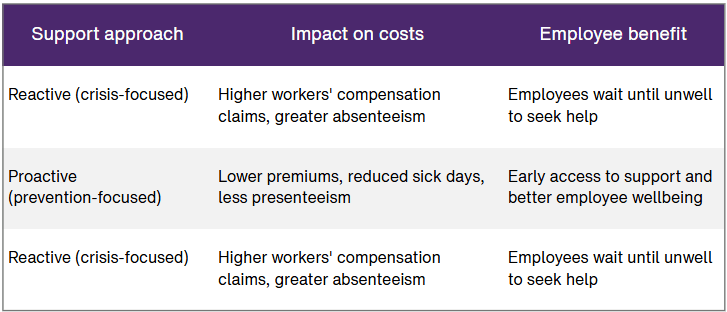
Paula and Matt underscore the importance of moving away from a reactive, “sick-care” model, where instead of waiting for people to become unwell, employers should focus on prevention. They can do this by ensuring that the wellbeing support provided to employees is personalised, meeting individuals’ needs wherever they are in their care journey, whether they’re feeling well, struggling or feeling unwell.
This proactive approach can help reduce worker compensation premiums, which are often one of the highest ongoing business costs. Effective workplace wellbeing programs can reduce stress by up to 40 per cent, strengthening the case for prevention. By investing in prevention, you create psychological safety at work and a safe workplace environment where employees can access support before reaching a crisis point. This helps businesses comply with the Fair Work Act and local safety regulations by mitigating workplace hazards before they cause harm.
Building your wellbeing ROI business case
HR leaders often face the challenge of justifying wellbeing program budgets to their CFOs. To help make a strong business case, you need to show both the financial return and the broader value of your workplace wellbeing programs.
The financial impact is clear, with findings by PwC showing that employers can recoup AU$3 for every AU$1 spent on comprehensive support through improved productivity and reduced claims. When you invest in workplace mental health support, you see measurable improvements. If your wellbeing programs reduce employee turnover by even five per cent, you'll save tens of thousands of dollars in recruitment and onboarding costs.
Beyond direct financial ROI, track the broader value of your programs. This includes improvements in employee engagement, workplace culture and team productivity. Workers who feel supported by their employer report higher motivation, improved morale, stronger job satisfaction and lower rates of burnout.
According to the MHI, employees rating employer support for mental wellbeing as excellent lose only 28.4 working days per year in productivity, compared to 58.4 days lost among workers rating support as poor (September 2024). That difference is worth measuring and reporting to your leadership team, as these programs play a significant role in retention and business performance.
Leadership behaviours that can drive results
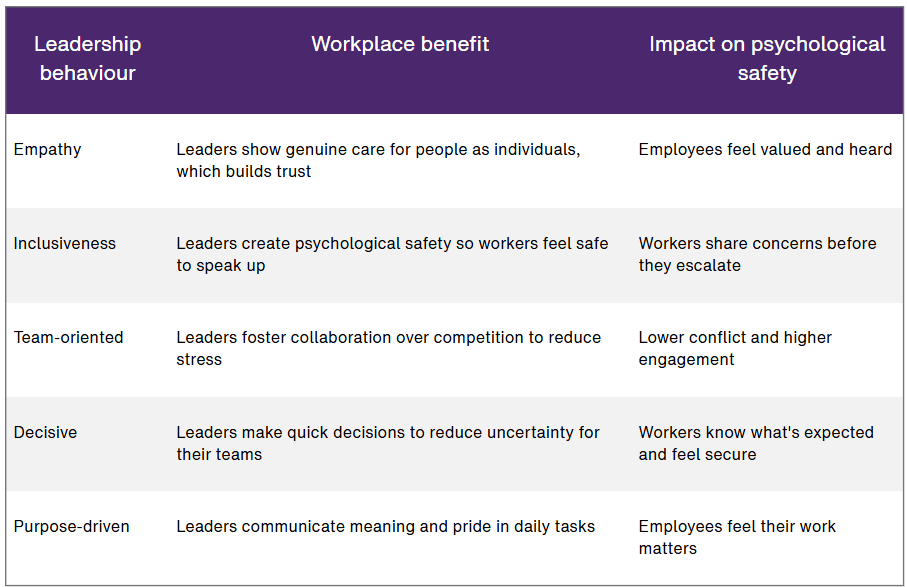
Leaders play a critical role in creating a resilient, mentally healthy workplace. The videocast reveals the key traits of leaders whose teams have better mental health and higher productivity.
Leadership commitment is essential for reducing stigma around mental health. Destigmatisation helps create an environment where employees can seek help earlier.
The table below outlines these positive leadership behaviours and their benefits:
Paula and Matt also share an example of an organisation that made mental health training mandatory for managers. Mental Health First Aid can also train staff to respond to mental health crises. As a result, the business saw EAP use increase and sick days decrease. Investing in training programs can help leaders spot early signs of struggle and support their teams effectively.
Build your workplace wellbeing program today
Check out our latest TELUS Mental Health Index for more insights into how employees are doing, and what you can do to help.
Download the reportFrequently asked questions
How does an employee assistance program help with workplace compliance?
An employee assistance program (EAP) provides confidential, professional support to workers facing personal or work-related challenges. By offering early intervention, an EAP can help employers meet their legal duty of care to maintain a psychologically safe working environment, including making reasonable adjustments where appropriate.
What’s the difference between reactive and preventive workplace wellbeing programs?
Reactive programs support employees only after they become unwell or take sick leave. Preventive programs focus on early intervention, manager training, resilience training and stress reduction to stop mental health issues from developing in the first place.
Why is manager mental health training important for businesses?
Managers are often the first to notice when an employee is struggling. Training helps managers identify early warning signs of mental distress, including sleep problems, conduct supportive conversations and guide employees to available resources like an EAP.
How do workplace wellbeing programs reduce workers' compensation costs?
Proactive mental health support can help prevent psychological harm before it leads to formal claims. This can reduce the frequency and severity of workers' compensation claims, which directly lowers your insurance premiums.
What’s the ROI of workplace mental health support?
While some ROI is financial (reduced absenteeism, fewer sick days and turnover costs), the broader value includes improved engagement, higher productivity and better workplace culture. Employees who feel mentally supported are more motivated and stay longer with their employer.