

Key takeaways
- The gender wellbeing gap is real. Australian women consistently report lower mental health scores than men, with a 3.9-point gap that directly impacts retention and productivity.
- Financial stress drives the divide. According to the 2025 TELUS Mental Health Barometer, 44 per cent of employees in Australia say financial concerns are the primary source of personal stress, with women disproportionately affected.
- Personalised benefits boost retention. 36 per cent of Australian employees would choose better wellbeing support over a 10 per cent pay increase, reinforcing the fact that modern benefits directly can strengthen employee retention and employee value propositions.
- Menopause impacts productivity significantly. Life-stage health transitions cost businesses billions in lost work time and early career exits, yet few employers provide targeted support.
- Legal duties and business cases align. Australian organisations must manage psychosocial risks to ensure a psychologically safe work environment. Companies that act see higher engagement and fewer lost workdays.
How wellbeing inequality impacts productivity and what employers can do
Supporting women’s wellbeing is more than a health priority. It's a workforce imperative. Women make up 47.7 per cent of the global workforce and play an essential role in economic and social progress. Research shows that companies that harness their full talent potential are 39 per cent more likely to outperform financially, while gender-diverse teams also generate 19 per cent higher revenue due to innovation. More broadly, women in the workplace can help businesses better understand market needs when teams reflect the consumer base, while varied perspectives also drive more creative ideas and better product development.
But without meaningful support, organisations risk losing these advantages and may struggle to attract top-tier talent when they’re not known for gender equality. As mental health challenges grow more widespread, their impact is increasingly visible across core aspects of business performance. Declines in productivity, reduced engagement, rising turnover and burnout are taking a toll on the workforce, and research from our TELUS Mental Health Index (MHI) shows that social isolation and financial stress make these effects worse.
On top of these realities, employers in Australia have a legal duty to manage workplace hazards. This is part of ensuring a psychologically safe work environment. Under workplace health and safety laws, leaders must focus on the proactive prevention of workplace problems.
Beyond legal duties, there’s a moral need. Women deserve workplaces that recognise their contributions and the realities of their lives.
The global gender wellbeing gap
Research from the TELUS Mental Health Index tracks the mental wellbeing of working populations across 12 countries. It confirms this wellbeing gap is both measurable and global. The MHI uses a score from zero to 100, where scores below 80 indicate mental health strain and future risk. Since the MHI launched, women have consistently reported lower mental health scores than men in nearly every region, and women tend to be 50 per cent more likely than men to report extreme burnout.
In Australia, the gap is clear. According to the MHI, women have a mental health score of 60.1 while men score 64 (September 2025). Both scores sit well below the healthy target of 80. Women are also more likely than men to rate their employer’s support as poor across all areas of wellbeing, including financial, mental and physical. This 3.9-point gap is significant when you consider that implementing mental health support in the workplace can reduce absenteeism by nearly 47 per cent.
Women in Australia are also experiencing burnout at a higher rate than men—42 per cent compared to 30 per cent. This raises concern not just for wellbeing but for workforce sustainability, with effects that extend beyond organisations into society. One contributing factor that warrants specific attention is menopause, which often gets addressed as a mental health concern rather than recognised as a distinct physiological transition affecting millions of working women.
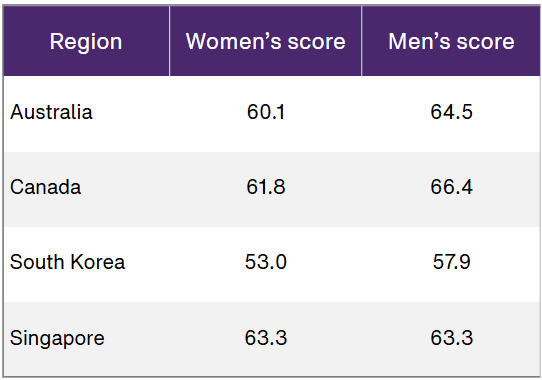
Why women in the workplace burn out faster
Work-life balance and sleep
With wellbeing being shaped both inside and outside the workplace, work-life balance pressures are one of the strongest contributors to mental strain among women. Globally, women do more than half of the world’s work (52 per cent) – and nearly half that work goes unpaid.
Family responsibilities link directly to sleep disruption, fatigue and lower focus at work, especially for mothers managing paid work alongside caregiving. In Australia, 29 per cent workers experience sleep disruption due to family or personal responsibilities. This is compounded by the fact that men are 50 per cent more likely than women to report no personal stress (March 2025).
Financial worries also contribute to sleep disruption, which affects work. Workers reporting that financial worries disrupt their sleep have mental health scores nearly 27 points lower than the national average, indicating a serious risk to both health and productivity (June 2025). By offering equal pay and flexible working conditions, companies can help retain women and reduce turnover costs.
Financial vulnerability
Financial stress affects women more severely in most countries surveyed by the MHI. When financial strain increases, women are more likely than men to reduce spending on their own health needs, which leads to a decline in mental wellbeing over time.
According to the 2025 TELUS Mental Health Barometer, 44 per cent of employees in Australia say financial concerns are the primary source of personal stress. Three-quarters of workers lack confidence in their financial future, with women more likely to feel financially vulnerable.
This financial vulnerability creates a harmful cycle. Women under financial strain cut spending on health and wellbeing, which further hurts their mental wellbeing and ability to perform at work. In Australia, 24 per cent of workers have cut back on health and wellness spending due to financial concerns, with women more likely to make this adjustment. The mental health score of this group is nearly 11 points lower than the national average (June 2024).
This is where personalised employee benefits can help make a real difference. Salary packaging and flexible benefits options increase employees' disposable income without adding to payroll costs. By offering these modern benefits, employers can help directly ease the financial burden women carry, demonstrating that they understand diverse needs and are committed to supporting their workforce. This can help strengthen both mental health outcomes and employee retention. Replacing an experienced staff member can cost between 40 and 200 per cent of that employee’s annual salary, making fostering an equitable culture imperative to help lower turnover and support long-term success.
Menopause and women's health research for women leaders
Research from Vira Health and Korn Ferry found that 47 per cent of women say health symptoms disrupt their work. While 83 per cent of women in Australia report at least one menopause symptom that affects their work. The findings also showed that 40 per cent experience six or more symptoms that affect performance, yet very few receive workplace support. Nearly one-third have quit or considered leaving their jobs during this life stage.
Vira Health CEO, Andrea Berchowitz said: “Menopause often hits at a critical career stage and there needs to be better care options if we want to seriously increase the number of women in leadership roles. The average age of a new CEO and the average age of menopause is 51. In the UK alone, about 14 million lost working days and 1 million premature career exits can be attributed to menopause. This isn’t going to change without connecting more women with the information and care options they deserve.”
The Office for Women of the Government of South Australia estimates menopause costs Australian organisations $10 billion in replacement costs alone. Moreover, 17 per cent of women aged 45 to 64 take an extended break from workforce participation due to illness, with menopause being a significant factor in this decision. Menopause costs Australian women $15.2 billion annually in lost earnings and superannuation. Menopause impacts 70 per cent of women in Australia, making them a significant workforce demographic. As one of the most significant health transitions in a woman's life, employers need to acknowledge it in both policy or practice.
What supporting women in the workplace actually looks like
The differences in mental health outcomes show that different groups need tailored support and the data reveals what works. Employees who rate their employer's mental health support as excellent score 19 points higher on the TELUS Mental Health Index than those who rate their support as poor (September 2025).
Workers with excellent support are also more productive, losing an average of 36 days per year compared to nearly 59 days lost by those with poor support (September 2024). Stronger management practices also help create inclusive environments where communication is more open, team collaboration runs more smoothly, and morale stays higher.
What effective organisations are doing differently:
- Modernising and personalising benefits by moving beyond one-size-fits-all benefits to flexible, personalised options that match what women at different life stages actually need
- Normalising conversations about health and care responsibilities
- Training leaders to recognise early signs of burnout
- Offering flexibility without a career penalty through progressive policies that help attract and retain a diverse workforce
- Creating mentoring and sponsorship pathways so women can get practical advice, support other women and succeed while building a stronger internal pipeline into executive roles
- Including menopause support in health benefits and policy
- Encouraging psychological safety in teams
- Tailoring programs to address the specific needs of women of all ages, such as employee resource groups, flexible work arrangements and enhanced manager training, while empowering women through fair treatment that raises job satisfaction across demographics and helps reduce turnover.
The bottom line
The gender wellbeing gap isn’t inevitable. Organisations that act intentionally to build comprehensive support can help retain talent and strengthen leadership pipelines. A public commitment to gender equality can also strengthen brand loyalty and investor confidence. The data confirms the cost of doing nothing.
Employee benefits modernisation starts with understanding what your workforce values. According to the Barometer, 36 per cent of employees in Australia would choose better wellbeing support over a 10 per cent pay increase. This reinforces that investing in personalised benefits strengthens your employee value proposition and can help drive retention, while strong workplace equity metrics also strengthens ESG credibility. When you offer benefits that address real challenges—like financial stress—alongside comprehensive workplace mental health support, you can create a workplace where women thrive.

TELUS Mental Health Index
Explore the Health Mental Health Index to find more data and actionable insights for your organisation.
Download the latest reportFrequently asked questions
What is the gender wellbeing gap?
The gender wellbeing gap is the difference in mental health and wellbeing scores between men and women. This gap can be driven by factors like burnout, unpaid caregiving, financial stress and life-stage health transitions. It directly impacts retention, productivity and organisational performance.
How does menopause affect women at work?
Menopause can cause physical and emotional symptoms that disrupt concentration and performance. Without workplace support, it can lead to lost working days, reduced hours and early career exits. Eighty-three per cent of women in Australia report at least one menopause symptom that affects their work.
How can modernised benefits help support women and improve retention?
Women often carry disproportionate financial stress and caregiving responsibilities. Personalised employee benefits—including salary packaging and flexible options—increase take-home pay and signal that your organisation values their needs. This can help improve mental health, reduce stress and increase retention.
How can employers support women's health at work?
Employers can offer flexible working arrangements, train managers to recognise burnout, provide comprehensive EAP services and include menopause support in company policies. Beyond these steps, modernising your benefits—moving from one-size-fits-all to personalised options—can help address the real financial and personal challenges women face, making them feel valued and supported.