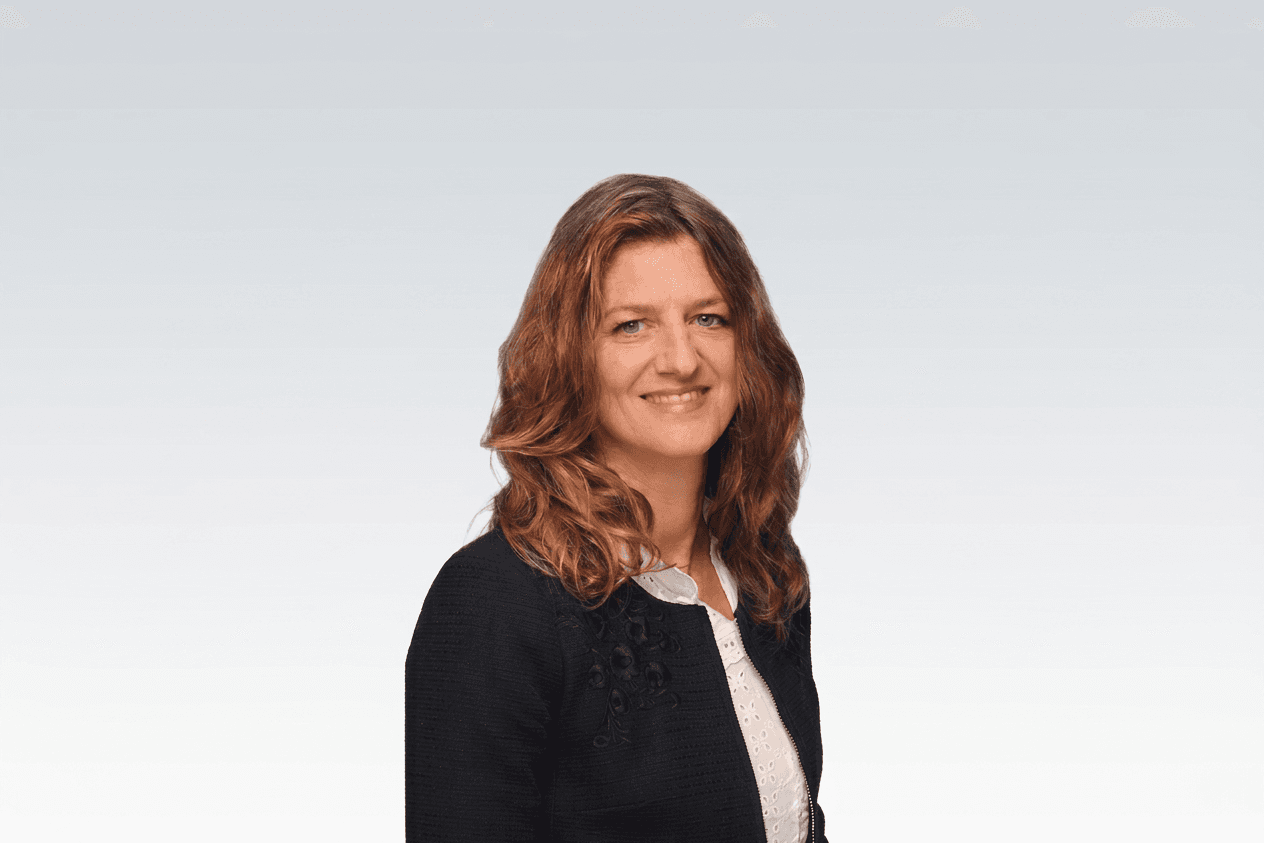
Christine Loos leads the development and scaling of advisory and people development expertise across TELUS Health in EMEA. Based in Madrid, she brings a global perspective shaped by her international experience.
With 15 years of experience in workplace wellbeing and mental health across Europe, Christine has dedicated her career to helping organisations thrive by strengthening mental health at both an organisational and individual level. Her work focuses on strengthening leadership capabilities, fostering psychologically healthy workplaces and ensuring that human connection remains central even as organisations scale and transform. Her work sits at the intersection of strategy, leadership and organisational culture.
Learn more about Christine and how she views strong leadership in today’s world:
Q: Can you tell us a little bit about your background, and the main focus of your role with TELUS Health?
A: I’m originally from Belgium and currently based in Madrid. My professional journey has been very international, and I’ve had the opportunity to live and work in eight different countries. That experience has shaped the way I see organisations and leadership.
At TELUS Health, my role focuses on integrating and scaling the expertise of advisory and people development including consulting, learning and coaching coming from our recent acquisitions across Europe and internationally. The objective is to connect capabilities, align cultures and ensure that the strengths of each organisation are preserved while benefiting from the scale of a global group.
In many ways, I see my role as a bridge: helping translate knowledge, align perspectives and create coherence across different teams and geographies.
Q: You've worked in eight different countries - how have you seen leadership expectations and approaches to employee wellbeing differ across cultures, and what universal truths have you discovered?
A: Working in different countries makes you realise that leadership styles can vary a lot. Cultural expectations influence how people communicate, make decisions or express authority. But some things remain universal: people need clarity, trust, and a sense of direction.
I often describe leadership as being closer to the role of an orchestra conductor. You are not the one playing every instrument. Your role is to create alignment, give direction, and enable others to perform at their best. Listening closely, trusting and empowering people on the ground is essential—especially when leading across cultures. What works for one team may not work for another, and being attuned to these differences helps avoid missteps and build effective, healthy teams.
Across cultures, the leaders who create the healthiest and most effective teams tend to share similar qualities: emotional intelligence, vision, and the ability to delegate with trust.
Q: You talk about the importance of leaders connecting with their inner self and stepping back - how do you personally practice this, especially given your global role?
A: I’ve learned over time that I’m not an effective leader when I’m not aligned internally. If I’m disconnected from my inner self or acting only under pressure, that inevitably affects the way I lead.
So I try to create moments where I can step back and reconnect with what truly matters. Asking myself whether my decisions are aligned with my values and my purpose is an important practice for me.
In a context where organisations face constant uncertainty, complexity and change, a leader’s inner stability becomes very important. Being able to remain calm and grounded has a real impact on the people around you.
Q: How can organisations support women in leadership without inadvertently reinforcing stereotypes about emotional labour being "women's work"?
A: I’m always careful not to essentialise leadership qualities by gender. I don’t believe in “female leadership” versus “male leadership.” There is effective leadership and ineffective leadership.
What I do see is a broader evolution in how organisations define effective leadership. For many years, leadership emphasised command, hierarchy, and technical mastery, rewarding those who could assert authority and drive results, often at the expense of people and culture. Today, there is growing recognition that sustainable performance also depends on emotional and relational competencies.
This shift is not about gender. It is about maturity, though of course it’s driven by diversity. From our research and experience in workplace wellbeing and mental health, we see every day how a leader’s ability to listen, create safe spaces, regulate their own stress, and foster trust directly impacts team engagement and psychological health. These competencies are not personality traits—they are skills that can be developed and formalised. Through learning, coaching and leadership programs, they are able to challenge and transform their postures to become inspiring leaders.
The conversation should not be about creating a different model of leadership for women. It should be about transforming the leadership model across the organisation. That said, targeted leadership programmes for women can play an important role in restoring balance. This can be achieved by creating spaces where confidence, visibility and influence can be strengthened in environments that have historically favoured other styles.
The risk of reinforcing stereotypes appears when emotional and relational responsibilities remain informal or invisible—assuming that women will naturally take care of team cohesion, listening, or emotional regulation. The solution is not to reduce the importance of emotional labour, but to professionalise it.
Organisations should make these competencies explicit, measurable, and part of leadership expectations for everyone, integrating them into development programmes, promotion criteria, and performance evaluations. When organisations formalise and value emotional and relational skills across all leaders, they support women without isolating them and build more human, sustainable workplaces for everyone.
Q: How do you create psychological safety when an organisation is going through significant change or uncertainty – which seems to be the norm these days?
A: I think that what creates a lot of anxiety in employees is not knowing what they should be doing. My solution is prioritising clarity before control. It’s about giving people a clear vision so they understand the direction, and take ownership of their work. Even when the future is uncertain, leaders can provide clarity on direction, priorities and what success looks like. This alone can significantly reduce anxiety.
Leader stability can also act as a stabilising force for employees. Leaders need to manage their own stress and model calm resilience. We operate in a context of constant uncertainty, ambiguity and complexity. In that environment, a leader’s internal state matters.
There is a quote from the Vietnamese Buddhist monk Thich Nhat Hanh that I often reflect on. He said, “When the crowded Vietnamese refugee boats met with storms or pirates, if everyone panicked all would be lost. But if even one person on the boat remained calm and centered, it was enough. It showed the way for everyone to survive.” I find this image very powerful. In many ways, leadership works like that.
At the same time, a healthy workplace is not a place where everyone is always positive or calm. It is not about suppressing emotions. Fear, frustration or even anger are normal reactions during change. The key is not to eliminate these emotions, but to create space for them to be expressed safely.
A psychologically healthy environment is one where emotions can be acknowledged, listened to and redirected constructively. When people feel heard rather than judged, anxiety decreases and collective intelligence increases.
Finally, uncertainty can also be reframed as an opportunity. Leaders can help teams see moments of instability not only as threats, but as spaces for innovation, growth and reinvention.
Q: Younger workers are reshaping what leadership looks like. What excites you most about these changes? Is there anything that concerns you?
A: What I find encouraging is that younger generations are challenging some long-standing assumptions about work.
They place a strong emphasis on balance, flexibility, relationships and meaning in what they do. In many ways, they are pushing organisations to rethink what sustainable leadership looks like.
This shift can be very positive. It encourages companies to build cultures where performance and wellbeing are not seen as opposites but as mutually reinforcing.
The challenge for organisations is to adapt quickly enough and demonstrate that leadership roles can be compatible with a healthy and balanced life.
Q: What’s the one thing you wish every leader understood about the connection between their behaviour and employee mental health?
A: The one thing I wish every leader understood is that their behaviour directly shapes the mental health and performance of their team. Leadership is not about being the smartest or the best in the room. It’s about creating the conditions for others to thrive.
A psychologically healthy workplace is one where people feel safe to speak up, share ideas, and even make mistakes. It’s about recognising that intelligence is collective, not individual, and that the strength of a team comes from developing and empowering each person.
Leaders who understand this focus on lifting their team, not themselves. They model curiosity, humility, and resilience. They provide clarity and support, while giving space for people to take ownership and grow.
In short, great leadership is about creating an environment where your team can grow, become the best version of themselves, innovate, and truly thrive.
Q: What is the number one way you support your own wellbeing?
A: The number one way I support my wellbeing is by taking time for stillness, whether through meditation, a walk in nature or moments of solitude. It helps me stay grounded, reconnect with my gut and my intuition, and maintain the calm and clarity I need.
Uncover more leadership qualities that make strong teams.
Download the 2026 TELUS Mental Health Index.
Learn more