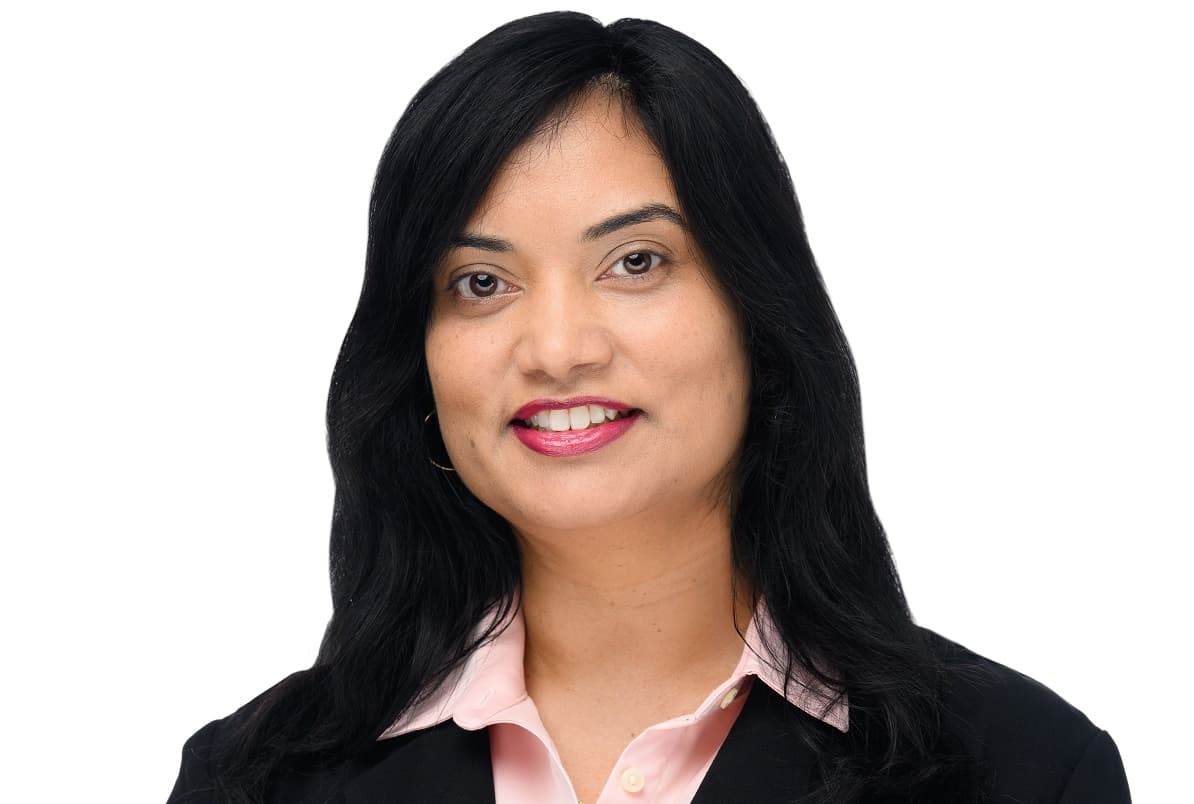
Linda Naranjit's 25-year journey in clinical mental health began as an intake worker for Employee Assistance Programs, processing referrals on DOS (disk operating system) platforms and tracking cases by hand.
Today, as Senior Director of Clinical Services at TELUS Health, she leads critical incident support globally, oversees embedded workplace counselors, and directs TELUS Health's total mental health digital program. Her pioneering work in internet-based cognitive behavioral therapy has earned recognition from the Canadian Counselling and Psychotherapy Association (Individual Practitioner Award for Technology and Innovative Solutions, 2021), the Employee Assistance Professionals Association (2022, for expanding cognitive behavioral therapy for Indigenous Peoples), and the International Society for Research on Internet Interventions (opening plenary speaker, 2022).
But what drives her work is a clinical philosophy rooted in cultural humility and a belief that healing happens on people's own timelines. That perspective makes her uniquely positioned to diagnose what's broken in most corporate wellness ecosystems: fragmentation, poor navigation, hidden barriers and a disconnect between what employees actually need and what companies offer. Those from marginalized or Indigenous communities, especially, face systems built on mainstream assumptions that don't serve them.
Below, she shares clinical insights on why corporate wellness programs miss the mark, how to scale mental health services responsibly, the real barriers keeping employees from seeking care, and why the most effective solutions combine digital innovation with deeply human, culturally-informed practice.
Q: Can you tell us a bit about your background and journey to becoming the Senior Director of Clinical Services at TELUS Health?
My journey is rooted in hard work, passion for serving people and ensuring we deliver the best care possible. I started as an intake worker 25 years ago with Employee Assistance Programs when we worked in offices using DOS platforms and manually had to track a referral by paper. Today, we take for granted our achievements and how far we have come – we are all digital now.
I went back to school while working at TELUS Health, completing a master’s degree in educational psychology and counselling. My clinical approach is rooted in culturally respectful, integrative and holistic positioning that is centered around unconditional positive regard for the individual. Across my career I have supported corporate clients with consultation on complex mental health, crisis management, workplace issues, student support programs, disability management, substance use and trauma as well as digital mental health services.
What drives me is simple but profound: ensuring that when people are at their most vulnerable, they know someone will be there to truly listen. My work with women experiencing domestic violence has deeply shaped how I approach support. It taught me that healing isn't linear, and solutions aren't always quick fixes. We heal on our own timeline, and that's okay. That understanding guides everything I do; meeting people where they are, with patience and compassion, for as long as they need it.
Q: Can you shed some light on your role? What does your day-to-day look like at TELUS Health?
I currently lead our Critical Incident team with a global lead oversight to ensure clinical best practice and standards. The critical incident team operates 24 hour a day, 7 days a week, 365 days a year and we get requests that range from acts of violence in the workplace, workplace accidents that include injuries/death, death of employee(s), natural disasters, acquisitions, mergers, downsizing and restructures. The work my team assists with is being there for people at their most vulnerable. We work to support people by making sense of a situation that doesn’t always make sense, and we do this through building trust and connection. My work is highly engaged with employer services with a significant degree of crisis management. I am always on!
My portfolio also includes oversight of counselors that are embedded within the workplace globally. Additionally, I oversee service delivery for our digital mental health counseling support. My day-to-day is almost always different and dependent on what is happening in the world. The ability to support people during what feels like a challenging time is truly a humbling experience. The work I do has purpose and I am surrounded by a great team of managers, team managers, counselors, coordinators and administrative support staff who all come together with a common goal which is to ensure the client is always supported. I recognize that we need each other to be able to build, grow and achieve and maintain that mindset so that we can deliver the best to our clients wherever they are in the world.
Q: With over 20 years in clinical leadership, how do you bridge the gap between what employees actually need from a mental health perspective and what corporate wellness programs typically offer? What's often missing?
Many corporate wellness programs provide programs and services that are either not well defined or lack consolidation of support. The responsibility is then on the employee to select what best suits their needs – but, when someone is challenged with processing because they are so overwhelmed by their symptoms or situation, it becomes challenging to know how to decipher the plethora of offerings that are made available to an employee.
What often is missing with programs and services is proper case management support from a skilled support person who can provide the necessary guidance for employees. Care navigation support for employees helps the employee to identify their needs, coordinate the support and ensure care is received with a follow up call from start to finish. Wellness programs lack continuity of support for the employee, and there is greater need for wrap around support for employees who need more care.
Q: You've been instrumental in developing internet-based cognitive behavioral therapy and are now leading TELUS Health's total mental health digital program. What do you see as the most significant shift in how organisations should approach digital mental health delivery compared to traditional models?
All modalities of support whether they are traditional or digital have a place in supporting the myriads of individuals seeking mental health services. The most significant shift to digital health happened during COVID (though digital health existed prior to COVID) where there was an acceleration in acceptance toward digital mental health and telephonic and video options. This was the means through which individuals had to seek for meaningful mental health support because in person support no longer existed.
What we saw was the rise of organisations offering digital cognitive behavioral therapy. This reinforced the research that digital mental health support – especially assisted by a therapist – could support individuals with mild to moderate depression and anxiety symptoms.
We are now seeing more mental health agencies exploring companion apps with their clients to assist with tracking overall well-being such as sleep and eating habits, even journalling tools to assist with self care. Then there are AI supports that are being explored where the user sentiment is picked up with responses to the user.
I believe that organisations need to be vigilant about the varying ways in which their employees access mental health support services; there isn’t just one way anymore and people are responding through different mediums to access support to get the help they need. I believe that younger generations are already becoming more aware of the importance of mental health and the practice of ensuring not only good physical health, but also ensuring psychological and emotional health becomes more embedded into wellness as a standard.
Q: You've successfully led clinician teams of 100+ across diverse populations. What's your approach to maintaining clinical quality and cultural competency when scaling mental health programs across large organizations?
The client is always at the forefront in my mind. As a clinician, I always consider what brought them to me and how I can be a safe place for them to share what they are carrying — to reduce the heaviness one step at a time. This requires empathy, listening skills and genuine care for the person through awareness and knowledge of the individual's situation. It is putting yourself into their shoes, so to speak, and understanding their cultural framework versus working from your own set of perceptions and/or biases.
According to Kohli, Huber & Faul (2010) “Cultural competence engages the development of abilities and skills to respect differences and effectively interact with individuals from different backgrounds”. I believe clinicians need to engage in the work to educate themselves and expand their repertoire (toolbox) to be able to work effectively with clients from diverse backgrounds. Our clients should not always be the teachers or bear the weight to educate and/or build awareness. I encourage inclusivity, diversity, equity and accessibility within my teams through ongoing education and group discussions that are often difficult.
On my team, there are varying degrees of people’s awareness, knowledge and skills as it relates to cultural competency; the winning component is attitude and if there is openness to learn and shift perspectives; we all win!
My goal as a leader is to be the bridge to elevate each other to be better/ No one is perfect, we must lean, learn and support each other’s growth. As a woman, a person of color, who supports diverse cultural ideologies, it is incredibly important to me to ensure that we provide mental health services with access to culturally diverse counselors (networks) so that we can deliver counselling in ways that feel safe for individuals who need our help most. This all contributes to ensuring clinical quality!
Q: You have extensive experience supporting mental health programs for Indigenous peoples and other marginalized populations. How should corporate health leaders think differently about mental health equity, and what are the practical first steps?
When supporting Indigenous Peoples and other marginalized populations, the most integral step is dismantling existing operating frameworks. What may work for mainstream populations may not work for Indigenous Peoples and marginalized populations, so recognizing and remaining open to exploring new ways of practice.
In many ways we work today, there is an overt position that is colonial in practice that can be detrimental to Indigenous and marginalized peoples; therefore, recognizing that adopting “accepted mainstream” practices are not always in the best interest of the individual and/or community. In these cases, one size doesn’t always fit all, and this is where cultural competency becomes central to development of new programs and services specifically with awareness building.
As I reflect on some of my experience in working with marginalized populations, it's truly an immersion into learning and appreciating the historical to current day challenges and struggles that help to identify what the barriers and needs are so that equity can be achieved. My experience has taught me that it's all in the relationship and building trust in a genuine and authentic way that honors the people you are working with.
Practical steps:
1. Appreciate the knowledge of the culture or community
2. Be transparent and accountable
3. Embrace humility
4. Expect to be led: truly listen
5. Ensure the work is mutually beneficial
6. Be open to a transformational experience!
Q: In your clinical experience, what are the real barriers preventing employees from accessing the mental health care they need? Beyond awareness, what's actually stopping people from seeking help?
There are several barriers that prevent employees from accessing mental health care, and a lot to do with ensuring services are truly confidential. Employers need to ensure that they create transparency on how employees can access mental health services in a manner that ensures their confidentiality is maintained.
Additionally, employers must consider the steps to access and how many steps it takes before actually receiving mental health services. We know that providing different opportunities to access allows for greater flexibility and access to mental health care. For example, your employer indicates they provide Employee Assistance Program support, but then you need to go to the occupational health nurse or Human Resources team for pre-approval, there is less of a likelihood someone will trust or access the services. As we progress into more digital technologies, we see more app-based approaches which is great because it offers quick and seamless access. However, there are employees that may not be as tech=savvy, or they may be in working conditions that prevent access to these types of services i.e. mining companies where broadband services are limited, and telephone access is the preferred method. Providing employees with different options to accessing mental health support decreases the potential for alienating employees within an organization.
Employee’s perception about getting mental health support continues to be a barrier to accessing much needed help. We know that mental health concerns continue to rise with barriers largely attributing to perceptions of trust, judgement, a sense of capability to work through the issue on their own and fears that the issue isn’t important enough, which leads to avoiding accessing support altogether. If this were not enough, then there is that sense of connection with a stranger and whether you can truly get support that is helpful. This is why counselor fit is so important and relevant because that creation of safety and connection is pivotal toward change. This is equally true for those from marginalized populations which is why representation truly matters. The need to relate or feel understood helps us move forward with a positive purpose.
Q: Cost is often cited as a primary barrier to mental health care. From a clinician's perspective, what's the real impact of out-of-pocket expenses on employee access and outcomes? How should organizations think about this investment?
Sadly, the impact is generally people do not access mental health services because cost is prohibitive and this can exacerbate worsening symptoms for individuals. Employers need to evaluate their programs and look at ways they fund insurance providers and EAP programs. I encourage employers to do research to understand their populations and get a sense of the prevailing mental health concerns that could impact their employees – weighing the program options they fund so they can arrange the right coverage for their people. How flexible are these programs? Can they be combined to maximize benefits in favour of the employee? If not, why not? It requires a lot of time and investment to get it right, but employers owe it to their employees and it ensures optimal coverage and mental health benefits for employees.
Q: How can digital mental health programs specifically address barriers to access? Does moving care online actually remove obstacles, or does it create new ones?
Digital therapy is a game-changer for people because now we support a population of people who may never have considered using counselling or therapy before. Let’s consider individuals who feel anxious about judgment—especially young adults and those with social anxiety. The anonymity and control make it less scary, and help normalize seeking mental health support. It is a step toward supporting their mental health; some help is better than no help at all.
But in-person therapy catches things screens can't: body language, energy and subtle cues that help therapists understand you better.
The real answer? Both matter. Different people need different things, so having both options available is what actually helps people heal.
Q: Many options for mental health support–such as therapists or counselors– struggle with demand exceeding supply—employees face months-long waitlists. As a clinician, what's the clinical consequence of delayed care, and how should organisations address this capacity challenge responsibly?
The consequence of delayed care impacts the individual but also our community and systems. We know that clients that don’t receive timely care can experience worse outcomes and sometimes utilize coping strategies that are more harmful i.e. substance use. When we don’t address the issues, they can become more complex and then we need longer treatment options that sometimes can burden our healthcare systems. Organizations have an incredible responsibility as it relates to preventative wellness programs they implement with building awareness and proper access to mental health care.
Q: Looking ahead, what's the one thing you wish every corporate health leader understood about the barriers employees face when seeking mental health care?
There isn’t just one barrier that influences why people are challenged with seeking mental health support. Employers need to recognize the complexity in that there are multiple factors that contribute to accessing mental health support from access, awareness, availability, cost, culture, discrimination, language, modality, stigma to trust. These areas need to be considered as employers develop wellness strategies within the workplace to better support their employees.
Q: How do you look after your own wellbeing? What is your self-care routine like?
To be honest, looking after my wellbeing is a process and it changes over the years depending on life circumstances and situations. What I can share is that taking time to reflect on what works well for you is pivotal to ensuring that you maintain optimal wellbeing. I consider the following essentials
1. Physical health (nourishment, movement, body scans)
2. Mental, emotional and spiritual health (awareness of thoughts and feeling and its impact, growth mindset opportunities)
3. Community health (support system of family and friends).
Self-care is a routine, the more you practice the better you get at handling challenges that come your way. I am a morning person, so I take time to wake up early, make a cup of tea, feed my dogs, then 20 minutes to reflect on what I am most grateful for in my life, then 20 minutes of something physical (it can be stretching, walking), then 20 minutes of reading something new. This primes me for the day! I also end my day by connecting with my family, especially my two boys who ensure that I get a laugh and a hug daily!
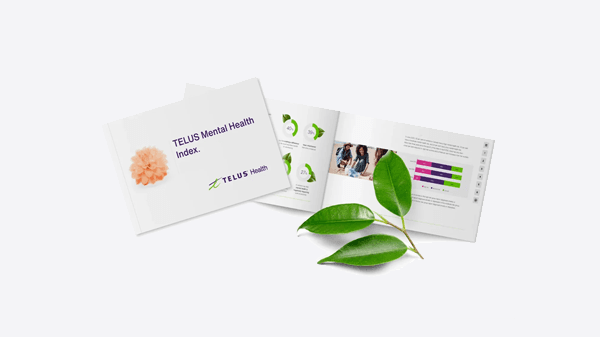
Looking for more mental health insights?
Download the latest TELUS Mental Health Index to learn more about the state of mental health of working people.
Access the mental health index