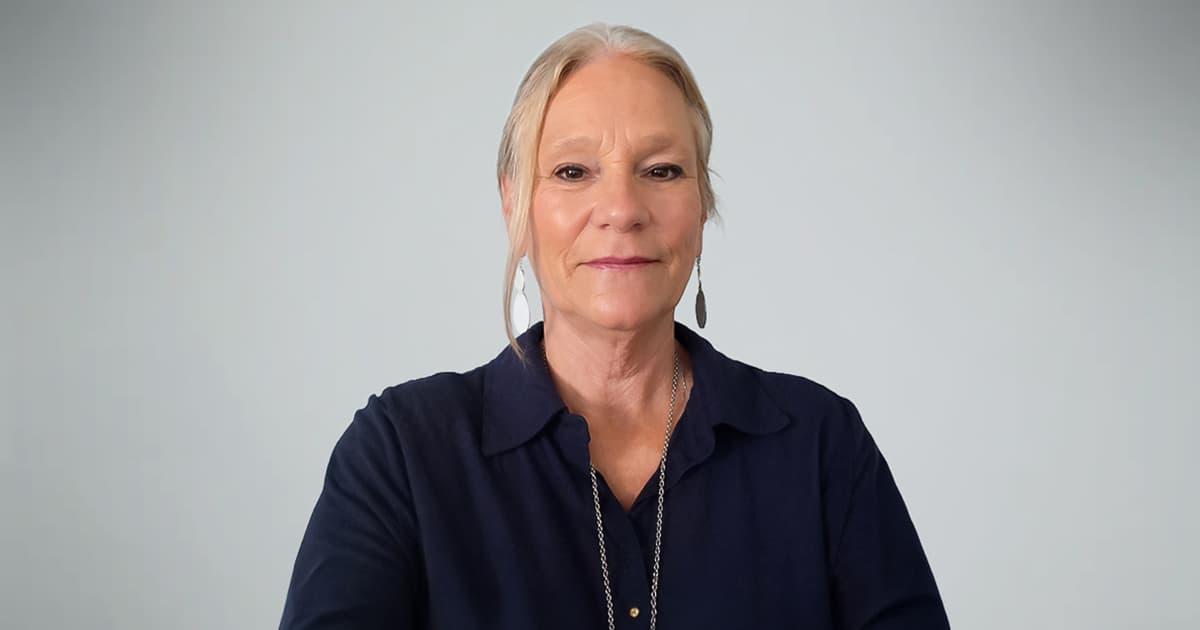
With nearly two decades navigating the healthcare sector—from transformative roles at GE HealthCare to his current position as VP of U.S. Sales at TELUS Health Employer Solutions—Garrett Cathey has become a trusted voice on a critical challenge facing employers today: how to move beyond fragmented vendor ecosystems toward truly integrated, clinically-driven employee health solutions.
That fundamental shift—from transactional benefits administration to strategic health partnership—is reshaping how organizations think about vendor relationships, clinical rigor and employee experience.
Below, he shares insights on vendor consolidation, the evolving role of advisors, mental health as a business performance issue and why the leadership decisions that matter most start with personal wellbeing.
On his leadership perspective and healthcare expertise
Q: You've spent nearly two decades in healthcare, from GE HealthCare to TELUS Health. What's fundamentally changed about how employers and their benefits advisors approach employee health?
A: What's shifted dramatically is that employers—and their advisors—are no longer asking, "what health benefits can we afford?" They're asking, "how do we actually improve the health of our workforce while managing costs?" That's a different conversation entirely. The days of one-off point solutions are fading. Employers are realizing that fragmented vendor ecosystems create friction for employees and don't move the needle on outcomes. I joined TELUS Health precisely because the industry is ready for a more integrated, intentional approach to employee health.
Q: When you look at the employer benefits landscape, what's the biggest structural problem you're seeing?
A: Vendor fatigue is real. Employers are often managing a dozen different vendors for EAPs, behavioral health, women's health, pet care, absence management—all disconnected. From the advisor's perspective, that fragmentation creates a problem too: their clients are paying for multiple solutions that don’t talk to each other, employees don’t get the seamless experience they deserve and the clinical insights get siloed. Without a full picture of employee health, it’s genuinely difficult to be strategic about addressing the root drivers of cost and well-being.
On the broker and advisor role
Q: How should brokers and advisors be thinking about their role in the era of clinical-first healthcare?
A: The most effective brokers I work with have made a clear shift: they operate as health strategists for their clients, not just benefits administrators. That means asking vendors the harder questions—“what’s your network depth? Can you actually get employees access to care—behavioral health, preventive care, crisis intervention—at the right time?” It means demanding transparency around clinical metrics, not just enrollment numbers. The goal is giving clients real visibility: how many employees accessed care, what outcomes improved, what medical spend decreased as a result. That level of insight is what separates a strategic partner from just another vendor on the roster.
On unified solutions and vendor consolidation
Q: Let's talk about the solution ecosystem you're building at TELUS Health. How does consolidation actually solve the vendor fatigue problem?
A: Instead of your employer clients juggling multiple vendor relationships, contracts and integrations, they work with one partner who can deliver a breadth of solutions—behavioral health, women's health, family support services, absence management and more—in a unified way. But it's not about breadth for breadth's sake. It's about an ecosystem designed to work together, with shared data and a coordinated care strategy. Your clients get simpler operations, clearer performance metrics, and more importantly, employees get a cohesive experience rather than fragmented touchpoints.
Q: What's the tangible benefit for a advisor's client when they consolidate vendors around a unified platform?
A: Operational simplicity is the first win—fewer contracts, fewer integrations, one performance conversation instead of ten. But the real value is strategic clarity. When solutions are integrated, you can see patterns: Which populations are at highest risk? When should intervention happen? What's driving your highest cost? That insight lets your clients be proactive, not reactive. And from an employee perspective, there's no friction—they get a personalized journey that anticipates their needs, empowers them with resources, and responds when they're in crisis, rather than bouncing between disconnected programs.
On clinical-first and personalized care
Q: You emphasize a "clinical-first" approach. What does that actually mean in the context of employer solutions?
A: It means the entire ecosystem is built around getting employees access to the right care, at the right time, delivered by qualified clinicians. Too many vendor solutions are built around engagement metrics or utilization numbers, not clinical outcomes. We ask: "Can we decrease medical spend in behavioral health by ensuring earlier intervention? Can we expand access to care so employees don't wait until a crisis hits?" Our vast network and platform capabilities allow us to do that—to predictively identify where employees might need support and remove barriers to care.
Q: How do you actually deliver a personalized care journey at scale?
A: It's complexity we solve through data and AI. We use tools like our Total Mental Health Index to understand each employee's holistic health profile—their behavioral patterns, life circumstances and specific needs. That allows us to surface the right resources, at the right moment, to the right person. An employee expecting a child gets proactive support around maternal health and family planning. Someone managing chronic conditions gets coordinated care. Someone in crisis gets immediate access. It's personalized, but it's systematic—driven by intelligence, not manual processes.
Q: What role does technology play in differentiating your approach?
A: Technology is the enabler of a truly integrated care strategy. Our AI assistant capabilities, combined with data analytics, help us identify gaps in employee health before employees even know they need help. We're moving beyond "here's a list of resources" to "here's what we think you need, and here's why." That changes outcomes. For your clients—the employers—it means better health metrics, lower medical spend and higher engagement. For employees, it's convenience and care that feels tailored to them.
On outcomes and ROI for employers
Q: According to the Gallup Wellness Index, workers with poor mental health miss an average of 12 days per year compared to just 2.5 days for other employees. What kinds of digital-first mental health solutions should brokers be looking for and recommending to their clients to address this issue?
That Gallup data point lands hard in client conversations because it translates mental health directly into business performance. When evaluating solutions in this space, three things consistently separate the credible from the cosmetic:
First, prioritize access to real clinicians. Digital-first shouldn't mean app-only. Employees with moderate to severe challenges need licensed therapists or psychiatrists—accessible through digital channels, but clinically rigorous. Look for platforms with meaningful wait times and actual treatment outcomes, not just engagement metrics.
Second, demand predictive intervention. The best solutions identify at-risk employees before a crisis hits. Instead of waiting for someone to reach out, the platform should surface insights: burnout signals, engagement drops, mental health risk factors. That intelligence lets employers intervene early and prevent the 12-day absence pattern.
Third, insist on integration and transparency. Mental health doesn't exist in isolation—it connects to physical health, family circumstances, financial stress. Solutions should be integrated into a broader care ecosystem and deliver clear outcomes: Did we reduce absenteeism? Did we decrease emergency mental health visits? Did medical spend improve? That's what matters.
The advisors gaining the most ground with their clients right now are the ones framing mental health as a business performance issue—not just a benefits line item. Clinical rigor, real access and transparent outcomes are the bar. Point solutions that can’t demonstrate those things tend not to survive the scrutiny.
On the market opportunity
Q: From your perspective, where is the employer benefits market headed?
A: We're moving toward consolidation around strategic partners. Employers and their advisors are asking harder questions about integration, outcomes and efficiency. The vendors who can deliver a unified ecosystem backed by clinical expertise and real data will win. The consolidation trend rewards the advisors already operating that way. That alignment is exactly what makes this an interesting moment for TELUS Health.
We’re already a leader in moving towards this integration by offering a range of mental health, benefits administration, and absence and disability management services through one trusted partner.
Garrett’s personal philosophy and views on leadership well-being
Q: You emphasize accountability and measurable progress in your leadership philosophy. How do you apply that same discipline to your own mental health and well-being?
A: I’m intentional about it—and I try to make that visible to my team. Every leadership meeting I run opens with a Well-being Moment before we get into any business agenda. It’s a brief, structured space to check in as human beings, not just as functional leaders. I started doing it because I believe you can’t build a culture around employee well-being if your own leadership meetings never surface it. Beyond that, I have clear boundaries around work—I prioritize sleep, exercise and time with family because I know those directly affect my performance and decision-making. And I recognize when I’m stressed or overwhelmed and address it rather than letting it compound. As a leader in healthcare, if I’m not modeling healthy habits, I lose credibility in every conversation I have with employers and brokers about mental health investment. It’s not about perfection; it’s about consistency and accountability to myself.
Q: How do you create a culture where your team feels safe to prioritize their mental health without it impacting their career?
A: It starts with transparency, and it starts before someone ever feels like they need to ask for help. A recent example: when I brought on a new Sales Director, one of the structured conversations in his first week was explicitly about mental health boundaries—what his recovery time looks like after heavy travel weeks, how we would flag early signs of overload and what a sustainable pace actually means in a high-demand national role. I didn’t frame it as an HR checklist item. I framed it as: this is how we build for the long run. The more senior the hire, the more important that conversation is, because those are the leaders who set the cultural temperature for everyone below them. Beyond onboarding, I encourage my team to use mental health resources—therapy, wellness time, real disconnection—without stigma. We set aggressive goals, but we’re deliberate about protecting people from burnout. When someone is struggling, we address it early: “What do you need? How can we restructure your workload?” That’s not soft management—that’s how high-performance teams stay high-performance.
Q: What's one wellbeing habit or practice that's made the biggest difference in how you lead?
A: Treating leadership like an endurance sport, not a sprint—and building recovery into the schedule the same way an athlete would. My role covers the US and LATAM, which means a lot of cross-country and international travel. I’ve learned the hard way that if I don’t build deliberate recovery time into my calendar after heavy travel weeks—time to decompress, reset and actually think rather than just execute—the quality of my leadership suffers in ways that are subtle but compounding. So now I protect that time the same way I protect a client meeting. I schedule thinking time. I’m deliberate about celebrating wins and acknowledging hard work, because mental health isn’t just about treating problems—it’s about creating an environment where people feel valued and connected to purpose. When your team knows you care about them as whole people, not just as output, the engagement and retention outcomes follow.

See what TELUS Health can offer your clients
Get more information on our integrated solutions for employee well-being.
Learn more