

Key takeaways
- Costs are rising and one-size-fits-all benefits packages no longer work for your diverse workforce
- A weak employee value proposition (EVP) drives turnover; modernising your benefits strategy can help build talent retention
- Personalised employee benefits can help increase engagement, reduce costs and improve adoption rates across your organisation
- Financial stress is a major driver of poor mental health; salary packaging and flexible benefits can help employees increase take-home pay
For years, employee benefits packages worked the same way. Employees chose from a basic health insurance plan, dental care and perhaps a gym discount if they were lucky.
But times are changing. It's getting harder to offer the same old options. Rising healthcare costs and changing employee values mean businesses must rethink their offerings.
Here's the challenge many HR leaders in Australia face: employers spend thousands on benefits packages that employees simply don't use. This happens when organisations design packages based on assumptions rather than what their people actually value. The result is wasted financial ROI, compliance headaches and limited impact on retention or engagement. This is the benefits disconnect.
But there's an opportunity in this challenge. When you modernise your benefits strategy, you can build a stronger employee value proposition (EVP) that helps attract and retain the talent your business needs. Research shows that 57 per cent of high-performing employees feel stuck at work, and attrition rates are up 14 per cent from last year. A modern, personalised approach to employee benefits can help solve this problem.
The days of cookie-cutter packages are ending. There's never been a more important time to redesign how your organisation approaches employee support. Here's what to expect in the coming years, and how you can build a strategy that works for your budget and your people.
Reducing employee benefits costs in a high-inflation market
Healthcare costs are climbing around the world. Globally, health insurance costs are expected to increase by 10.3 per cent on average, and some regions will see as much as 14 per cent higher costs. This trend puts immense pressure on company budgets.
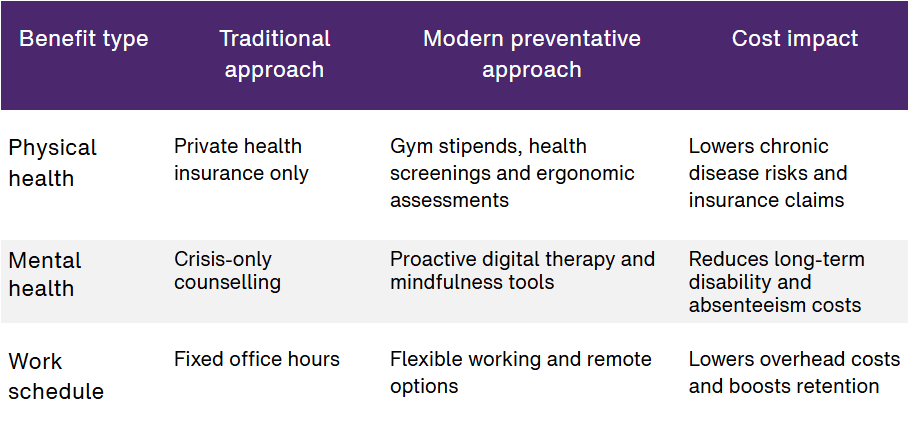
Employers who offer group health plans feel this pain acutely. One way to offset costs like these is through offerings that stress preventive healthcare, not just emergency intervention. We know that investing in comprehensive employee support can be directly linked to greater productivity, lower absenteeism, lower healthcare costs and stronger engagement and retention.
When you offer early support, you can help resolve minor health issues before they become expensive medical claims. This shift is key to helping to reduce employee benefits costs over the long term.
Excellent employee benefits and mental health support meet diverse workforce needs
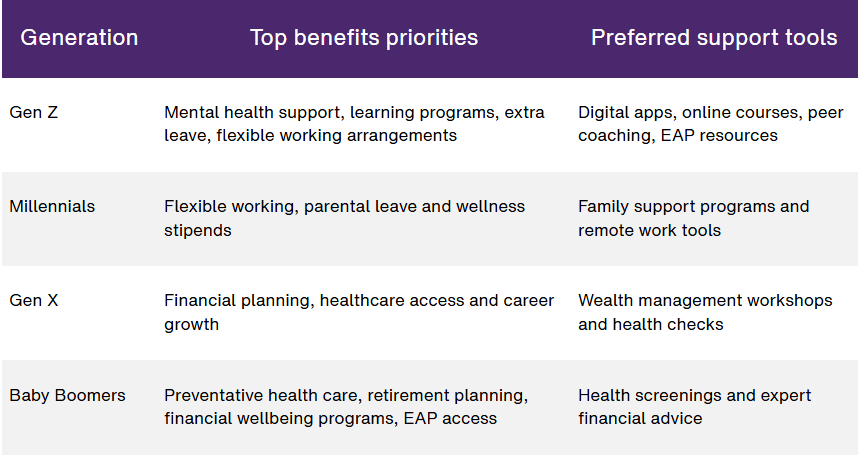
Today's workforce is more multigenerational than ever. Baby Boomers, Gen X, Millennials and Gen Z work side-by-side, and each group has different ideas of what makes an excellent employee benefits package.
In Australia, this personalisation challenge is even more critical. According to the TELUS Mental Health Index (MHI), 36 per cent of workers would prefer better support for their wellbeing over a 10 per cent salary increase (January 2025). This reveals that what employees want from benefits extends far beyond traditional insurance products.
For younger workers, retirement plans are often a low priority. As data from the Australian Bureau of Statistics shows, mental health conditions are common among young adults. Consequently, Gen Z employees value mental health support, learning opportunities and paid time off. At the opposite end, older workers often focus on different priorities. Employees approaching retirement value financial education, critical illness coverage and preventative health screenings.
Age is just one way to break it down; priorities vary across other lines, as well. For example, women have traditionally valued the kinds of benefits that help them navigate challenges brought on by gender norms, like flexible work and caregiving.
To satisfy everyone, your benefits must be diverse. The table below shows how priorities differ across generations in the workplace.
Key trends in employee benefits for workplaces in Australia
In Australia, employee wellbeing isn’t just a human resources goal. It's a legal requirement.
Under Work Health and Safety (WHS) laws, employers must manage psychosocial hazards, and take active steps to prevent stress, burnout and bullying. This means that providing workplace mental health support is a compliance necessity, not an optional perk.
According to the MHI, 36 per cent of workers in Australia are at high mental health risk, 36 per cent feel anxious and 33 per cent feel isolated (September 2025). These statistics reveal that mental health support isn't optional—it's essential for meeting your legal obligations under Australian WHS laws and maintaining a psychologically safe work environment.
The impact on productivity is tangible. The MHI also shows that employees who rate their employer's mental wellbeing support as poor have mental health scores 15 points lower than those rating support as excellent, and lose an additional 30 days per year in productivity (September 2024). This is why modern employee benefits management requires employers to offer proactive workplace mental health support as a core component of their benefits strategy.
How flexible working shapes the future of flexible benefits
Flexibility is a major part of the future of benefits. Employees want control over when, where and how they work.
In Australia, the Fair Work Act gives eligible employees the legal right to request flexible working arrangements. This can include working from home, changing start times or working compressed hours. In fact, flexible working isn't just a trend but a legal right that shapes how you must design your benefits.
This means your benefits strategy must accommodate various work patterns, from compressed weeks to remote work options. When designing flexible employee benefits, consider how remote workers access physical health services, wellness programs and other support. For example, instead of subsidising a gym near your office, offering a wellness stipend gives remote employees choice and control over their wellbeing investments.
Offering flexible work is a highly effective way to attract top talent without increasing your payroll costs significantly. It helps employees manage caregiving duties, reduce travel stress and maintain a healthy work-life balance.
However, flexibility must be supported by the right tools and benefits. If your team works remotely, your benefits should be digital and accessible from anywhere.
Building a personalised benefits strategy and implementation roadmap
You don't need a massive budget to offer great benefits. The secret is personalisation. When you tailor your offerings to your unique team, you stop spending money on programs that employees won't use.
If you’re unsure where to start, follow these three steps:
- Survey your workforce - Ask your employees what they value most and what they don't use, and to help you understand the preferences and diverse needs across your workforce. Assessing what employees want from benefits should be the foundation of your strategy
- Review your data - Look at how many employees use your current programs. If participation is low, find out why. Which benefits drive engagement and retention?
- Communicate clearly - Make sure your team knows how to access their benefits. Use email, team meetings and digital portals, and consolidate information into dashboards to improve access and understanding, with regular reminders to improve engagement with the benefits package
By listening to your workers, you can design a flexible program that supports their health and helps keep your business costs under control.
Next steps
Modernising your benefits strategy starts with listening to your employees and understanding their real needs. This will enable your organisation to offer personalised benefits that are tailored to meet diverse needs. This helps improve the employee experience, support personal wellbeing and strengthen loyalty over time.

TELUS Health
TELUS Health EAP is designed to support Australian organisations with proactive, scalable mental health solutions. Our programs can help you meet your WHS obligations while creating a psychologically safe workplace that attracts and retains top talent.
Learn moreFrequently asked questions
What is the future of benefits in Australian workplaces?
The future of benefits focuses on personalisation, preventative health and flexibility. One-size-fits-all plans are being replaced by customised options that support mental, physical and financial wellbeing. Modern employee benefits management means listening to your workforce and tailoring offerings to what they actually value.
How can employers reduce employee benefits costs while improving outcomes?
Employers can lower costs by investing in preventative care, such as health screenings and mental health support. These programs help resolve health issues early, which reduces absenteeism and expensive medical insurance claims. Personalised benefits also mean you're not paying for programs employees don't use. Tax-effective options like salary packaging increase take-home pay for employees at minimal cost to your organisation.
Why is flexible working considered an important benefit in Australia?
Flexible working helps employees maintain a healthy work-life balance and manage personal duties. Under the Fair Work Act, eligible employees have the legal right to request flexible arrangements. It's a highly valued benefit that improves employee retention and satisfaction without increasing payroll costs significantly. It also demonstrates your commitment to supporting diverse employee needs.
What are the legal requirements for employee wellbeing in Australia?
Under Australian Work Health and Safety laws, employers must identify and manage psychosocial hazards in the workplace. This means businesses must actively protect their employees' mental health and safety. Offering accessible mental health support and flexible working arrangements are key ways to meet these obligations and create a psychologically safe work environment.
What do Australian employees want most from their benefits?
According to the TELUS Mental Health Index for Australia, 36 per cent of workers would prefer better support for their wellbeing over a 10 per cent salary increase. This shows that Australian employees prioritise mental health support, flexible working, financial wellbeing programs and learning opportunities. Younger employees especially value mental health resources and development opportunities, while older workers prioritise preventative health and retirement planning.