

Key takeaways
- Modern EAPs can help prevent burnout before crises occurs - Today’s employee assistance programs offer proactive tools like wellbeing assessments, stress management coaching and activity tracking to help employees and their managers become aware of and recognise early warning signs and symptoms of burnout and fatigue, rather than waiting for a crisis to happen.
- Burnout is widespread in Australia - According to the TELUS Mental Health Index, 61 per cent of Australian workers feel somewhat or extremely burnt out, with high workload being the leading cause and a major contributor to burnout symptoms. Common symptoms of burnout include feelings of isolation, irritability, lack of energy or motivation and disengagement from work.
- Awareness and communication gaps limit EAP effectiveness - 55 per cent of Australian workers don’t know or say their employer doesn’t offer an EAP. Leadership should actively communicate the full scope of EAP services to help employees use these resources for everyday stress management and burnout prevention, not just crises.
- EAPs help Australian employers meet legal compliance requirements - Providing comprehensive EAP services can help employers comply with the Fair Work Act and manage psychosocial hazards proactively, reducing the risk of burnout-related compensation claims and creating a psychologically safe workplace.
Why an employee assistance program (EAP) isn't just for crises
We’ve come a long way since the early days of the employee assistance program (EAP). Here’s why today’s EAP can help even the most thriving worker stay healthy and productive.
Employee assistance programs, or EAPs, began as a way to help workers who were struggling with stress. They first gained popularity at the tail end of the Great Depression, as an extension of substance abuse programs like Alcoholics Anonymous; in the following decades, these offerings evolved at various companies to include other programs, like financial and legal aid. But EAPs were traditionally designed to be reactionary, an extra safety net for employees who were going through a crisis.
With occupational burnout affecting a significant portion of the Australian workforce, EAPs have evolved to address not just crises but the systemic workplace factors that lead to fatigue and disengagement. In recent years, however, EAPs have evolved into something much more holistic, becoming preventative and maintenance systems for even the most engaged, active and emotionally healthy employees. Read on to learn more about this powerful tool and how it can help support employee wellbeing and keep your teams happy and productive.
Why employees and employers need employee support programs
Increasingly, employers today are finding that offering health insurance and healthcare can’t ensure employees’ holistic wellbeing alone. They can tell, because absenteeism and unplanned leave are costing them dearly. According to the TELUS Mental Health Index (MHI), 47 per cent of workers in Australia (April 2024) often end their workday feeling mentally and/or physically exhausted, which directly impacts their ability to perform the next day.
The financial impact is substantial. According to research, poor mental health costs the Australian economy an estimated AU $220 billion each year. In the workplace alone, the impact exceeds AU $14 billion annually in lost productivity, absenteeism, presenteeism and staff turnover.
Overall employee engagement is staggeringly low, too, sending the cost of disengaged employees sky-high. According to research, 34 per cent of workers in Australia find it more difficult to be motivated at work, and 61 per cent feel somewhat or extremely burnt out, with high workloads being the leading cause. Excessive workloads and personal demands can contribute to burnout, which in turn can escalate into mental health issues such as anxiety and depression.
In this light, it’s easy to see how keeping employees feeling engaged, confident and thriving is in everyone’s best interest. Modern employee assistance programs are designed specifically to tackle these issues, with a variety of resources to help support employees wherever they may be on the care continuum, from feeling well to struggling to feeling unwell. Many EAPs also extend services to the immediate family members of employees, recognising the impact of personal challenges on work life. These programs provide confidential support for both work-related and personal issues affecting employee wellbeing. When employees can access the support offered by modern EAPs at any time, they’re more resilient, and that can have a substantial impact on an organisation’s long-term success.
How EAPs offer more than damage control
But what does this “variety of resources” entail? Certainly, it includes the kinds of mental health and EAP counselling services people usually think of when they hear the term “EAP.” But beyond these traditional offerings, the EAP of today provides a holistic range of services, including support for caregivers (children, aging parents and relatives, etc.), physical health resources, legal advice, learning resources and much more.
How employees can proactively use their EAPs
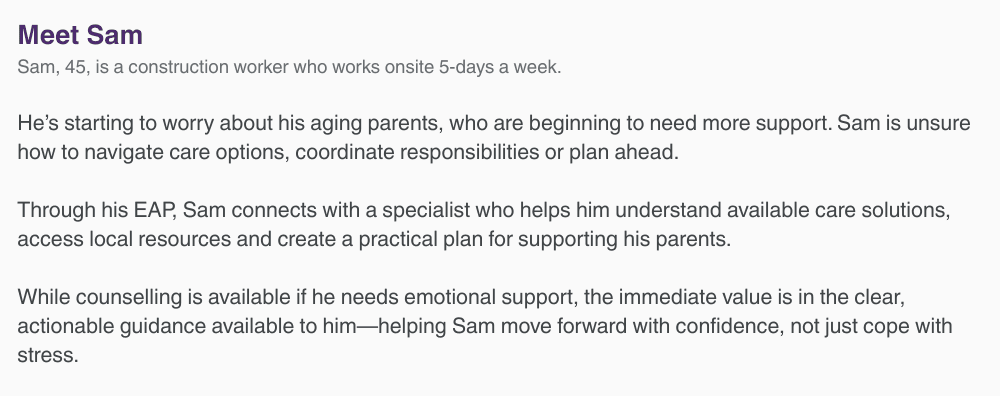
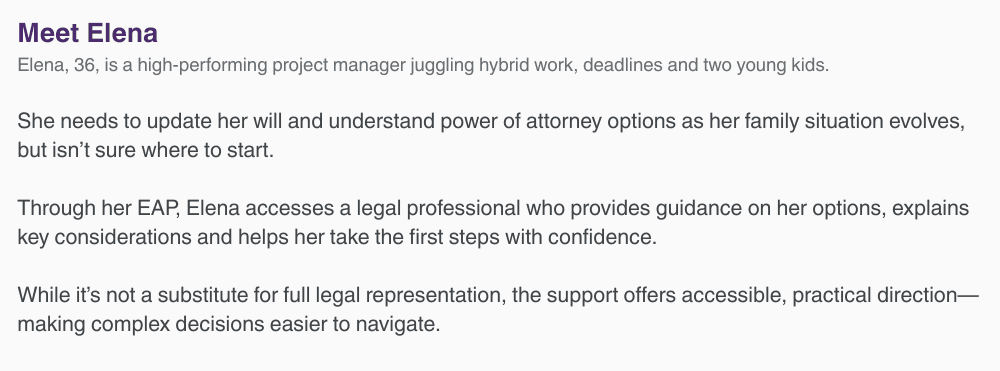
Modern EAPs are designed not just for emergencies, but can also offer proactive tools and resources, such as training and coaching and activity tracking, to help support employees before challenges arise, such as burnout and workplace fatigue. EAPs can also help employees maintain a healthy lifestyle, including work-life balance, regular exercise and proper nutrition. More than just assisting employees in crisis, EAP resources can help employees who already feel well stay that way.
“As a clinician, I’ve seen people flourish when they have unlimited access to personalised support like they do with the right EAP,” said Dr. Matthew Chow, Chief Mental Health Officer, TELUS Health. “Programs that support employees, whether they’re feeling well, struggling or feeling unwell, can make all the difference for employers who want their employees happy, healthy and thriving. The cost of not offering support like this can have a cascading impact on performance, for both employees and the organisation.”
Preventing burnout and managing workplace fatigue
Occupational burnout isn’t just an individual problem. It’s a systemic workplace issue that employers must address proactively. Research shows that 27 per cent of workers feel burnt out because they have too much work to do within working hours. Another 20 per cent report having too many personal demands, and 12 per cent feel a lack of recognition for the work they do. Burnout can manifest in the body as physical symptoms such as headaches and body pain, and can also disrupt sleep patterns, further impacting overall health.
A modern EAP can help prevent burnout before it escalates. Rather than waiting for employees to reach a crisis point, these programs offer early intervention tools. They include wellbeing assessments that identify early warning signs of fatigue and stress. Activity tracking helps employees monitor their mental health. Coaching and counselling provide support before burnout takes hold. Maintaining good mental health and mental wellbeing is essential, and EAPs provide resources to help support this, including tailored assistance for emergency service workers and culturally aware services for First Nations people.
This proactive approach to managing fatigue in the workplace can also help employers in Australia meet their legal obligations. Compliance with the Fair Work Act means businesses must mitigate workplace hazards proactively. EAPs can assist in managing psychosocial hazards and meeting duty-of-care obligations under workplace health and safety frameworks. By offering comprehensive EAP services, employers can help reduce the risk of burnout-related compensation claims and create a culture where employees feel supported.
How EAPs empower workers and reduce disengaged employees
An effective EAP is one that can adapt, meeting employees wherever they are across the care continuum. It offers employees the ability to anticipate and be ready for challenges before they arise; then, when they do come up, the EAP empowers them to act and advocate for themselves in the moment. Finally, it equips them with the tools and resources needed to respond adequately in the aftermath of the unexpected.
A more senior employee, for example, might use their EAP's financial services and legal advice to help them anticipate what steps they'll need to take before they retire. As they transition, they may use it again to speak with a mental health coach, empowering them to make decisions and embrace change with confidence. Finally, once they've retired, their EAP may have the education and the documentation they need to adapt to life after career.
Access to flexible and personalised EAPs allow employees to receive the workplace mental health support they need and feel cared for by their employer, which can help lead to a reduction in disengaged employees through "quiet quitting", a phenomenon that describes when employee performance suffers due to burnout and other stressors. "Taking care of ourselves is a learned skill, one that we all need support and practice to get good at," said Dr. Chow. "With an EAP, employees can build that skill with the support of experts to be prepared for anything, so they can bounce back faster and stay well longer."
Increase EAP utilisation through communication
Any member of a people team can tell you this from experience: employees can't, and won't, use a resource they don't know about. And with 55 per cent of workers in Australia reporting that they don't know or say their employer doesn't offer an EAP, the barriers to access are clear.
EAPs aren't as instantly recognisable to the average employee as, say, a health insurance plan; if they're not sure what an "employee assistance program" is, that set of words could mean anything. As a result, leadership needs to be able to communicate what these resources mean for their employees in concrete terms and in a variety of formats and locations.
And for employees who have heard of EAPs, that communication will need to include debunking misconceptions and stigma around who and what these programs are for. Yes, EAPs are great for responding in the wake of a crisis, but they can also be essential resources for those "anticipation" and "empowerment" moments in life, too, and leaders can help ensure their people make the most of their EAPs by normalising those uses. Managers should emphasise that EAPs aren't just for people in crisis. They're tools for managing stress, preventing fatigue and maintaining wellbeing before burnout occurs.
This can take the form of onboarding documentation with examples and real-world scenarios where employees might find various offerings in their EAP useful, but also training managers in the details so they know when and what information and use cases to pass along to their direct reports whenever an opportunity, or crisis, comes up. Leaders know their people, and when they fully understand the scope of an EAP, they can be the best advocates for both, making these programs not only an essential resource but a sound business investment.

TELUS Health
Explore our proactive, scalable solutions that can empower your workforce with the resources they need to stay well and engaged.
Learn moreFrequently asked questions
What is an employee assistance program (EAP)?
An employee assistance program is a confidential workplace benefit designed to help employees deal with personal and professional problems. These programs offer mental health support, financial guidance and legal advice to improve overall employee health and prevent burnout before it occurs.
How does an EAP help prevent employee burnout?
Modern EAPs offer proactive tools like wellbeing assessments, stress management coaching and physical health resources. These services help healthy employees maintain their wellbeing and recognise early warning signs of burnout and fatigue. By addressing workplace stress early, EAPs prevent burnout from escalating into serious mental health issues.
What are the early signs of workplace fatigue that managers should watch for?
Early signs include declining motivation, increased absenteeism, reduced productivity, difficulty concentrating and emotional exhaustion. Employees may also withdraw from social interactions or show signs of stress. Managers trained to recognise these signs of fatigue in the workplace can encourage employees to access EAP support before burnout becomes severe.
Does an EAP help Australian businesses meet legal requirements?
Yes. Providing an EAP helps Australian employers proactively manage psychosocial hazards and prevent occupational burnout. This supports compliance with the Fair Work Act and local workplace health and safety regulations. By addressing burnout and fatigue systematically, employers reduce the risk of workers' compensation claims and create a psychologically safe workplace.