

Key takeaways
- Physical health powers performance. Employee physical health shapes energy, focus and emotional resilience, making it the foundation of workplace performance and productivity.
- Poor physical health carries a measurable cost. Workers in the UK dissatisfied with their physical health lose 58.4 working days of productivity per year, compared to 35.5 days among satisfied workers, according to the TELUS Mental Health Index.
- Presenteeism hurts before absence shows up. Deloitte estimates presenteeism costs UK employers around £24 billion of the £51 billion lost to poor mental health each year.
- Self-service perks aren’t enough on their own. Employees who are struggling or unwell rarely self-initiate care, so employer-led outreach, manager training and clear care pathways matter.
- Proactive support reduces sick leave. Early risk screening, HSE-aligned stress risk assessments and integrated wellbeing support help UK employers cut sickness absence and recover lost productivity.
To be energised, you need exercise. That holds true for everyone, and it’s why employers should consider supporting employee physical health if they want to help enhance performance and productivity in the workplace.
Physical health is more than a personal lifestyle choice supported by gym discounts and app subscriptions. It powers an employee’s ability to think clearly, manage stress and cope with financial pressures. When someone deals with chronic fatigue, poor sleep or unaddressed pain, every other part of their wellbeing feels the strain.
Regular moderate physical activity significantly reduces workplace burnout and emotional exhaustion, particularly among desk-based employees. The organisational impact is substantial. According to Deloitte, poor mental health costs UK employers an estimated £51 billion a year, with presenteeism accounting for around £24 billion of that. This makes physical activity promotion a crucial strategy for both employee wellbeing and organisational success.
The pressure on workers in the UK is clear. The TELUS Mental Health Index (MHI) puts the mental health score of workers at 65.0, with 32 per cent having a high mental health risk and 33 per cent feeling anxious. One in five workers also cite long wait times or limited availability of care as a barrier to getting support. Employers who wait for employees to seek help on their own risk leaving their most vulnerable people behind.
So why does physical activity affect an employee’s level of emotional exhaustion? In short, it’s because there are numerous factors that contribute to someone’s overall wellbeing, and they’re all interrelated. Some of the main components of health are mental, physical and financial health, though there are other factors and social determinants in play as well.
Here’s a closer look at physical health, and how it intersects with other elements of health to impact employee engagement, productivity and performance.
Physical wellbeing at work: what is physical health?
Physical health refers to the body’s ability to function optimally. Regular physical activity is closely linked to good physical health across the lifespan. In order to improve and sustain physical health, physical activity is important.
According to recommendations from the World Health Organization (WHO), healthy adults ages 18 to 64 should engage in at least 150 to 300 minutes of moderate intensity aerobic physical activity (or 75 to 150 minutes of vigorous intensity activity) every week.
Among adults, it helps prevent chronic diseases such as diabetes, cardiovascular disease and cancer. Regular physical activity also reduces risk for mortality overall, especially premature death.
Benefits of physical activity also positively impact mental health, reducing anxiety, depression and stress levels. This too reduces the risk for chronic physical disease. These benefits extend into the workplace. In the UK, physically inactive workers lose nearly 12 additional working days in productivity annually compared to active employees (September 2024).
The connection between physical and mental health
Along with being physically present at work due to reduced absenteeism, employees who stay active also show up for work mentally. A workforce supported in its physical and mental wellbeing, and at reduced risk for chronic disease, offers multiple benefits, including greater creativity and productivity, more active problem-solving and stronger workplace cohesion. Regular activity can also reduce stress, improve mood and lower the risk of mental ill health.
On the other hand, having poor mental health often leads to poor physical health. For instance, one study found that people with depression were more likely to be physically inactive, experience serious body pain, have trouble doing everyday activities and rate their own health as worse. In comparison, people with good mental wellbeing were more active and had fewer of these health problems.
Source: TELUS Mental Health Index
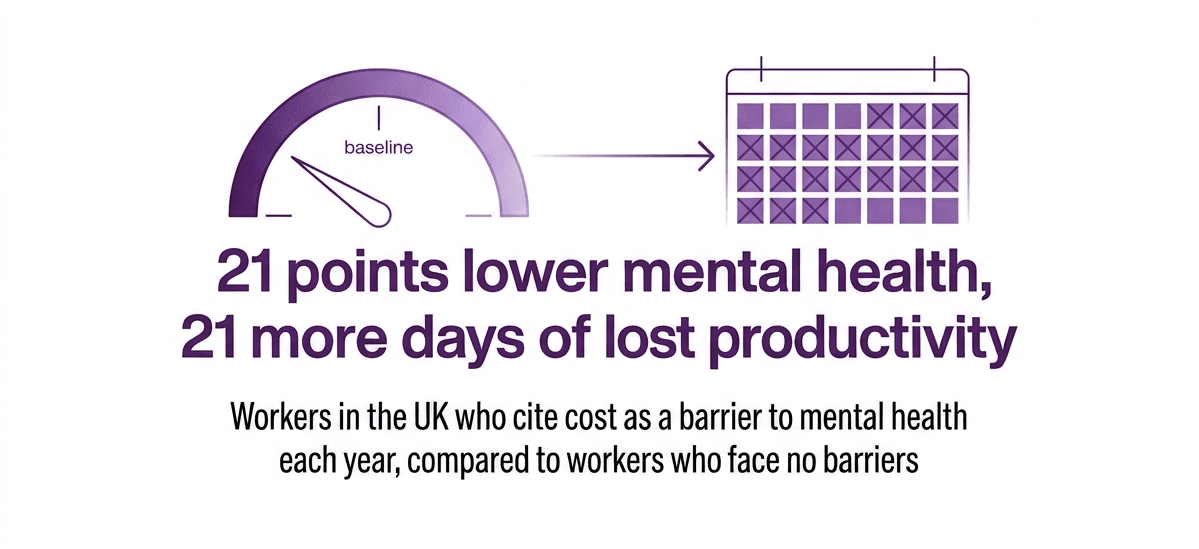
Access to care shapes this connection too. The MHI found that workers in the UK who cite cost as a barrier to mental health support score 21 points lower and lose 21 more days of productivity each year than workers who face no barriers. When wait times for care stretch, employers who offer direct routes to support can help close a gap that employees can’t close on their own.
The connection between physical and financial health
Employees struggling with financial health and economic stability often experience significant stress, which can manifest in various physical and psychological symptoms. These symptoms include poor sleep, irritability, low energy, anxiety and even physical health conditions like migraines or irritable bowel syndrome, while also leaving people feeling they have less control over daily life and work life balance. All of these can substantially impact both personal wellbeing and workplace productivity.
According to Cebr research, about 10 per cent of full- and part-time workers have missed work due to financial worries, losing almost five days each on average per year. Of the workers who experienced reduced productivity due to financial distress, about 20 per cent said their concerns cost them up to one work hour per day, while 29 per cent reported losing one to two hours each day. Almost one in 10 reported losing three to four hours, and five per cent reported losing the entire workday.
The cost of living crisis can intensify this strain and hurt retention when employers don’t address financial wellbeing support. These kinds of concerns can also limit the time these workers have left to take care of their physical health, and take a toll on the energy and motivation they need to do it.
The impact of physical health on employee productivity
Harvard Business Review cites a series of studies that identify how physical health affects workplace performance and productivity. The researchers found that daily physical activity brings physical, affective and cognitive improvements through a series of mutually reinforcing next-day benefits that they refer to as “resource caravans”.
By enhancing sleep quality and protein synthesis, physical activity helps people excel at work by increasing their energy, vigour, focus and energy levels. More energy can give them the stamina to do their best work without getting worn down. Greater focus can enable them to be alert, pay attention and be more creative in their problem solving, while also improving their ability to retain and concentrate on information.
The pan-European TELUS Mental Health Index highlights this relationship between physical activity and productivity. In the report, workers who were dissatisfied with their physical health experienced a productivity loss of 77.8 workdays annually, over 25 days more than colleagues who were satisfied with their physical health (September 2024).
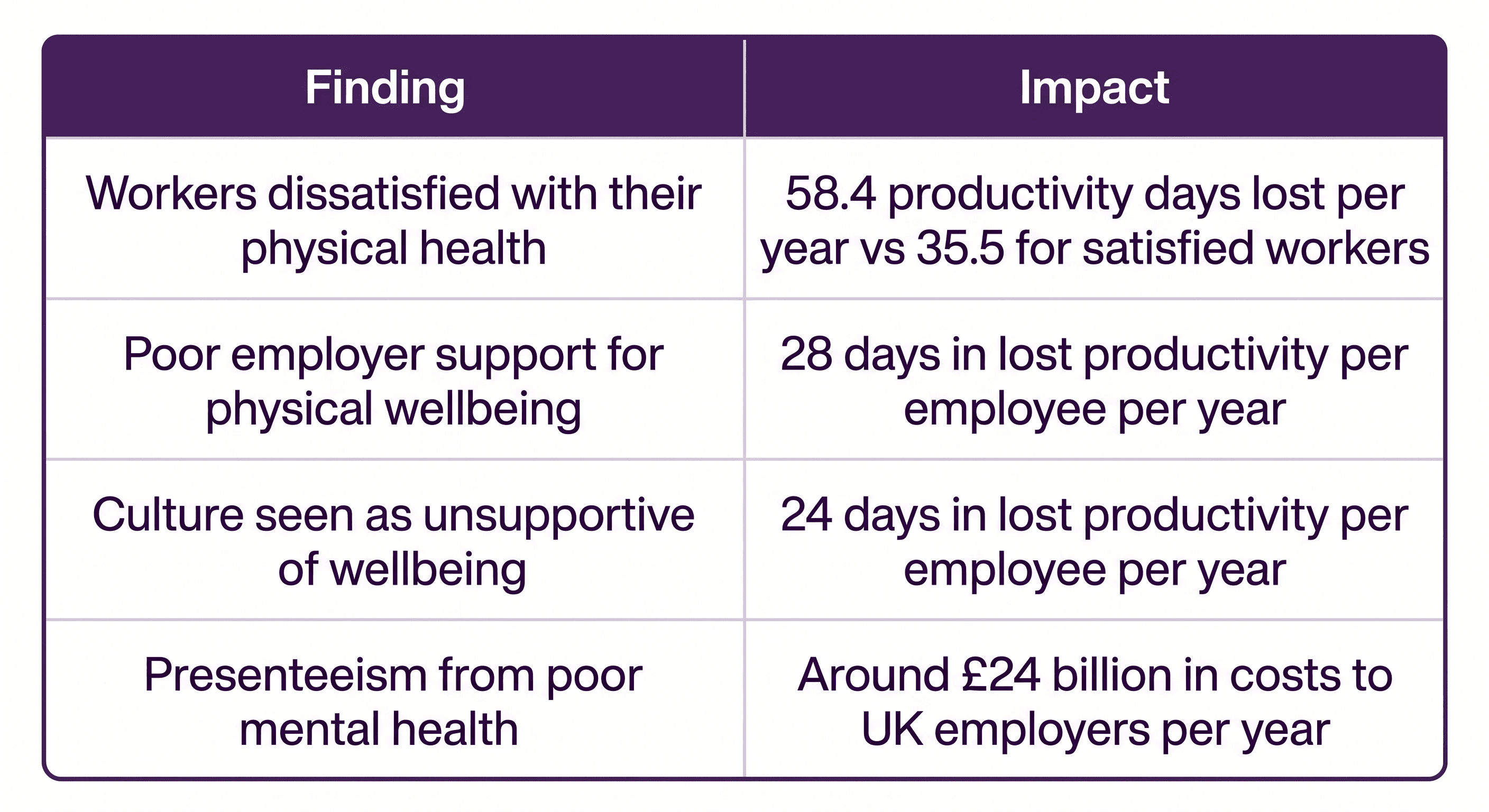
The UK picture is just as stark. The MHI found that workers dissatisfied with their physical health lose 58.4 working days of productivity per year, compared to 35.5 days among satisfied workers. Workers who rate employer support for physical wellbeing as poor also score 16 points lower on the index and lose an additional 28 working days annually.
What poor physical health costs UK employers
Sources: TELUS Mental Health Index and Deloitte
How physical health affects workplace performance before absence shows up
Lost productivity rarely starts with a sick note. Fatigue, chronic pain and poor sleep quietly drag down output while employees are still at their desks. This is presenteeism, and Deloitte estimates it accounts for around £24 billion of the £51 billion that poor mental health costs UK employers each year.
Because physical and mental health feed each other, unaddressed physical decline can escalate into mental health challenges and, eventually, into insurance claims data that arrives too late to act on. Spotting early signals such as absence patterns, engagement dips and changes in manager check-ins works far better than waiting.
Why companies need to advocate for employee physical health
It can be difficult for employees to maintain a physically active lifestyle when they’re balancing their time at work with managing other everyday commitments. That means employers have both a responsibility and a vested interest in making space for employee physical health, reflecting the importance of wellbeing in the workplace and helping create a healthy workplace environment. It’s also a sound business decision, because human wellbeing can multiply business results.
According to a European study, 85 per cent of businesses reported increased productivity with flexible work arrangements. This could include offering flexible start times or extended lunch breaks to allow employees to attend morning fitness classes, prepare nutritious meals or schedule medical appointments during less busy hours. Flexible working can also make it easier to attend a gym class or use discounted gym memberships.
Employers can also promote regular breaks, walking meetings and fresh air to reduce long periods of sitting and improve time spent moving during the day. In this way, organisations can foster a culture of proactive health management, while offering access to digital tools can give employees the ability to access support wherever they are.
Moreover, promoting physical fitness in the workplace has been shown to significantly reduce the risk of work-related injuries. One study found that employees with higher levels of physical activity had a 15 per cent lower risk of workplace injuries compared to their less active counterparts. This reduction in workplace accidents can not only help to improve employee wellbeing but also contributes to increased productivity and reduced absenteeism.
One size won’t fit everyone. Employees sit at different points on a wellbeing continuum, and support works best when it meets them where they are.
Matching support to the wellbeing continuum
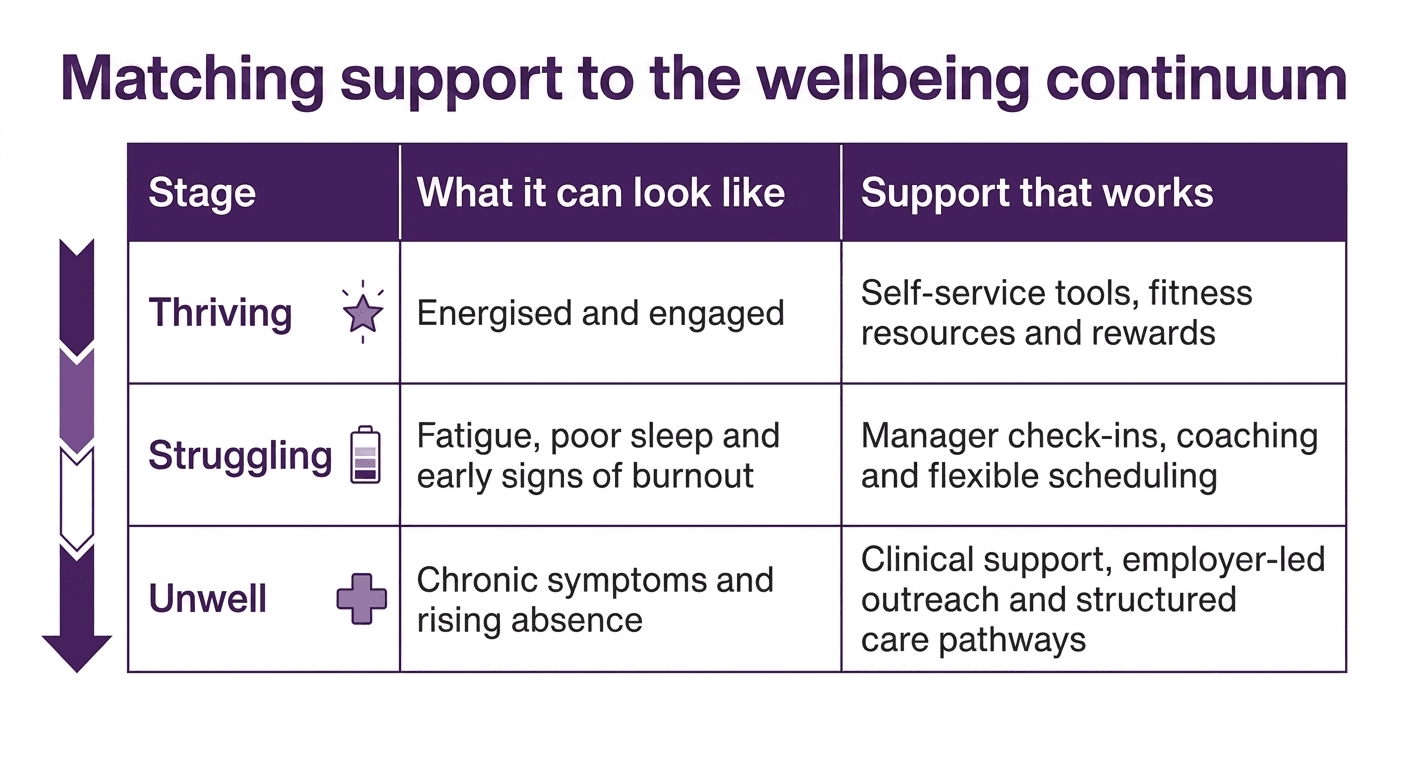
Self-service perks tend to engage people who are already thriving. Employees who are struggling or unwell rarely self-initiate care, so employer-led outreach and manager capability matter. Training managers to spot exhaustion and burnout early is one of the most practical investments an organisation can make, and leadership development programmes can help build those skills.
Reducing employee sick leave in the UK starts with proactive support
UK employers have a legal duty of care to protect the health, safety and welfare of their people. The Health and Safety Executive expects employers to assess and manage the risks of work-related stress. Building physical health support into that risk management approach turns a compliance obligation into a practical way of helping to reduce sickness absence.
A proactive approach can include health risk assessments that identify issues before they become chronic, direct access to support that bypasses long waits for care and integrated employee health and wellbeing solutions that connect digital tools, counselling and coaching in a single care pathway. It pays off. The MHI found that six in 10 workers in the UK describe their organisation’s culture as supportive of their wellbeing, while those who describe their organisation as unsupportive lose 24 more days of productivity every year.
Poor physical health can correlate with mental and financial health issues, and so nurturing physical health can play a powerful role in resolving them. When employees feel their best, they can achieve their best, and supporting good health is essential to sustained wellbeing at work.

Holistic health: The intersection of employee mental, physical and financial wellbeing
Explore the interconnected aspects of employee health and how they affect the performance of individuals and organisations alike.
Download the eBookFrequently asked questions
How does physical health affect workplace performance and productivity?
Physical health directly impacts cognitive function, stamina and emotional regulation. TELUS Mental Health Index data shows workers in the UK dissatisfied with their physical health lose 58.4 working days of productivity per year, compared to 35.5 days among satisfied workers, linking better health to stronger productivity and higher job satisfaction. That loss comes from a combination of presenteeism (working while unwell) and absenteeism.
What’s the most effective way of reducing employee sick leave in the UK?
Shifting from reactive support to a proactive approach is key. That means identifying risk early through health assessments and manager check-ins, training managers to spot burnout signals, offering accessible physical health support and an employee assistance programme, and aligning the whole approach with HSE stress risk assessment guidance.
How does physical wellbeing at work support mental and financial health?
Wellbeing experiences across the team don’t exist in isolation. Poor physical health, such as chronic sleep deprivation, pain or poor healthy eating habits, reduces an employee’s ability to cope with workplace stress and financial anxiety. Improving physical health works the other way too, acting as a gateway to better mental resilience and lower health costs.
Why aren’t digital wellness tools enough on their own?
Self-service tools and rewards work well for employees who are already doing well. People under severe stress or in crisis rarely seek out care on their own. They need employer-led outreach, manager support and clear routes to clinical care alongside self-guided tools.